Why mice move in when they do
Mice live outdoors in Madison all summer, in gardens, woodpiles, tall grass along bike paths and the edges of parks and conservancy land.
When nights start dropping toward freezing in October, they look for warmth and food, and a house with a gap at the foundation is the easiest place to find both.
Once they are inside, they stay until spring and breed the whole time.
Two species are common. House mice are gray-brown with a long, nearly hairless tail and live closely with people.
Deer mice have a white belly and feet and a two-toned tail; they are more common in garages, sheds, cabins and homes near woods and fields.
Deer mice can carry hantavirus, so their droppings should be handled carefully.
Rodents near the Near East Side
- Small dark droppings in the basement, pantry, drawers or behind appliances
- Scratching or scurrying in walls or ceilings at night
- Chewed food packaging, nests of shredded paper or insulation
- Grease marks along walls where they travel
- A musty smell in closed cabinets or the basement
Where mice get into Madison houses
Old Madison homes have a lot of character and a lot of gaps. The usual entry points:
- Stone and block foundations. Mortar crumbles over a century, leaving gaps that mice slip through, often hidden behind a basement shelf.
- The sill plate. The joint where wood framing sits on the foundation is rarely tight in older homes.
- Utility penetrations. Gas, water, electric, cable and AC lines all pass through the wall, and the gaps around them are rarely sealed well.
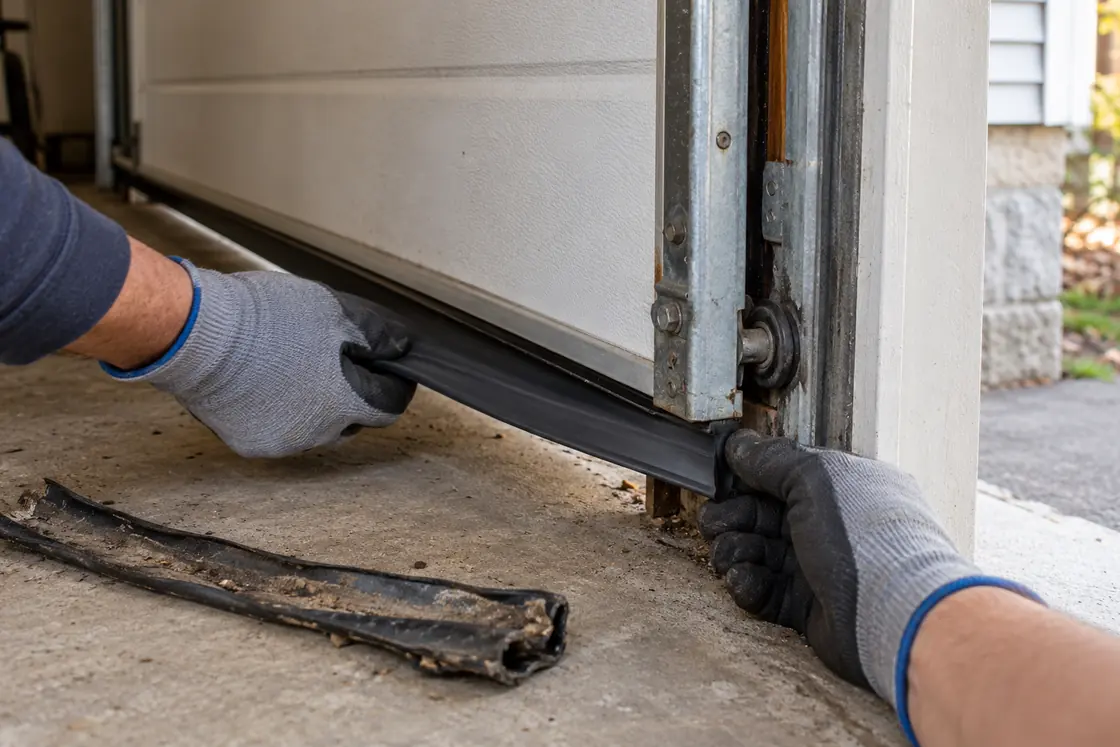
- Garage doors. Worn bottom seals and the corners where the door meets the frame.
- Porches and additions. Where an added porch or room meets the original house, there is often a void.
- Basement windows and window wells. Gaps around old wood frames.
In Madison, rodents near Monona are traced from the ridge vent, not from a product chosen before anyone looks.
Inspection
The technician checks the basement, utility room, attic, garage and the outside foundation, maps the droppings and runways, and finds the gaps mice are using.
Sealing
Gaps are sealed with materials mice cannot chew through: copper or steel mesh with sealant for small holes, hardware cloth for vents, door sweeps and garage seals where light shows.
Foam alone is not used because mice chew through it.
Trapping
Snap traps go along walls, behind appliances and in the basement and attic where the mice travel.
Traps inside mean the mice are removed rather than dying in walls. Bait stations, if used, stay outside in locked boxes.
Follow-up
The technician returns to check and clear traps and look for new droppings. New activity means there is still a gap, and it gets found.
Writing down where rodents were seen near Middleton Hills, including the eave gap, makes the Madison visit shorter and more exact.
We do not scatter poison in your basement or attic. We do not rely on ultrasonic devices or peppermint oil.
And we do not call the job finished until a follow-up shows activity has stopped.
Cleanup
Do not sweep or vacuum dry mouse droppings, which stirs up dust.
Wear gloves, spray the droppings and nest material with a disinfectant, let it soak for a few minutes, then wipe up with paper towels. Large amounts in insulation are better handled by a professional.
Garages, cabins and cars
Mice love attached garages, especially ones with bird seed, grass seed or pet food stored in bags. They also nest in cars, lawn tractors and boats that sit for a while and chew wiring.
Store feed in sealed metal or hard plastic bins, keep the garage door seal in good shape and check stored vehicles in fall.
Rats in Madison
Norway rats are less common than mice in most Madison neighborhoods, but they do turn up near restaurants, dumpsters, compost piles, chicken coops and along the waterfront.
They burrow along foundations and under sheds and decks.
If the droppings are about the size of a bean rather than a grain of rice, or you see a burrow two to three inches wide, tell the technician, because rats need larger seals and different traps.
What to look for near Hilldale area
Call when you see the first droppings, or in early fall if you had mice last winter. Call now and tell us where the signs are.
Rodent quick facts for Madison
- House mouse (*Mus musculus*): the most common rodent inside Madison homes. It fits through a gap about 1/4 inch wide and breeds all winter indoors.
- Deer mouse (*Peromyscus maniculatus*): brown above and white below, common in garages, cabins and homes near fields and woods.
- Norway rat (*Rattus norvegicus*): less common than mice but found near creeks, alleys, compost and commercial areas; it burrows under sheds and slabs.
- Entry points: gaps in stone and block foundations, utility lines, garage door corners, dryer vents and the rim joist.
- Health: droppings and urine can carry *Salmonella* and other germs, so cleanup is done with gloves and disinfectant, never by sweeping dry.