Why Madison has a short but intense mosquito season
Madison sits between Lake Mendota and Lake Monona, with Lake Wingra, Lake Waubesa, Cherokee Marsh, the Yahara River and dozens of ponds and wetlands nearby.
Mosquito season here usually runs from late May to September. A wet spring floods low ground and ditches, and floodwater mosquitoes hatch by the millions within days.
Later in summer, mosquitoes that breed in marsh vegetation and in stagnant water, including the species that carry West Nile virus, take over.
Homes near the lakes, the arboretum, the marshes and wooded parks feel it most.
Where mosquitoes breed in your yard
The marshes are not the only source. Many of the mosquitoes biting you hatched in your yard or the one next door:
- Clogged gutters and downspout extensions
- Buckets, toys, wheelbarrows, tarps and tires
- Plant saucers, birdbaths and pet bowls left outside
- Rain barrels without tight screens
- Low spots in the lawn and garden that stay wet after storms
- Kiddie pools, boat covers and grill covers
For mosquitoes in Madison, the visit starts at the weep holes and then follows whatever that shows.
Walk-through
The first visit is a walk of the property looking for water that stands for more than a few days and for the shady places where adult mosquitoes rest during the day: under decks, in shrubs and hedges, along shaded fence lines, in tall grass at the yard edge and under the eaves on the north side.
Barrier treatment
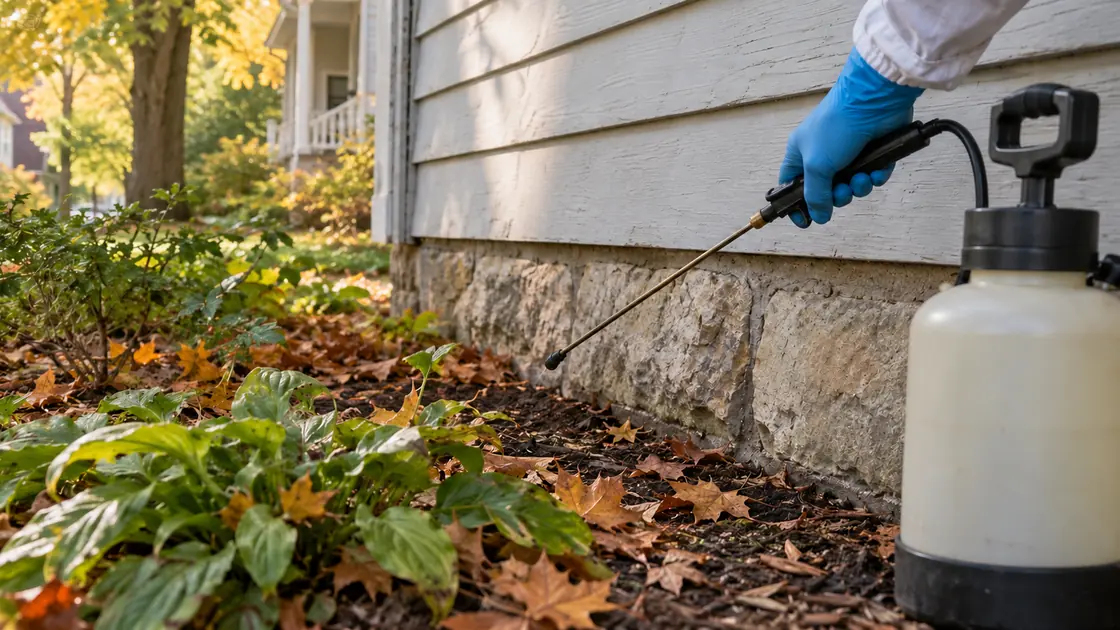
Those resting areas are treated so mosquitoes landing there die, and the treatment keeps working for a few weeks.
It is applied to foliage and shaded structures, not open lawn, and not to flowers where bees and butterflies feed.
Breeding water
Water that can be dumped is dumped. Water that cannot, such as a garden pond or a drain that stays wet, can get a larvicide that stops larvae from developing into adults.
A season plan, not a single spray
An event treatment helps for a graduation party or a cookout.
For the whole summer, mosquitoes keep hatching and drifting in from wetlands and neighboring yards, so visits are usually repeated every few weeks from late May or June into September.
You get the schedule before you sign up and can stop when the season ends.
Ticks in the same yards
Yards that back onto woods, the arboretum or tall grass often have deer ticks as well.
Ticks live in leaf litter, brush and the shady edge of the lawn, not in the middle of it.
Ask about including those edges when you call, and check yourself and pets after time in the woods.
Getting the most from each visit
Between visits, dump anything that collected water after a storm, keep gutters running clear, refresh birdbaths and pet water every few days and put a fine screen on rain barrels.
Mow the yard edge and thin dense shrubs near the deck so there is less shade for resting mosquitoes.
Lakeside and marsh-side yards always see some mosquitoes drifting in, but these habits make each treatment last noticeably longer.
Mosquitoes and health
West Nile virus is found in Wisconsin mosquitoes most summers. Most bites are just itchy, but fewer mosquitoes around the house means fewer chances of a bite from an infected one.
Use repellent at dusk and wear long sleeves in shady parts of the yard.
For mosquitoes in Madison, the visit starts at the weep holes and then follows whatever that shows.
We do not fog the neighborhood or spray open lawn, and we do not treat flowering plants where pollinators feed.
A good program cuts mosquito numbers enough to use the yard again; it does not promise zero.
Where mosquitoes show up near the isthmus
Call in May to start before the season, or whenever the yard has become hard to use. Call now and tell us how big the yard is and where the bites happen.
Mosquito quick facts for Madison
- Inland floodwater mosquito (*Aedes vexans*): hatches in big numbers after heavy rain and is behind most bites in a wet Madison summer.
- Northern house mosquito (*Culex pipiens*): bites at dusk and night, breeds in catch basins and stagnant water, and can carry West Nile virus.
- Eastern treehole mosquito (*Aedes triseriatus*): breeds in tree holes and old tires and can carry La Crosse virus in the upper Midwest.
- Season: usually late May through September in Madison.
- Larval control: products such as *Bti* stop larvae in water that cannot be dumped, such as rain barrels.